


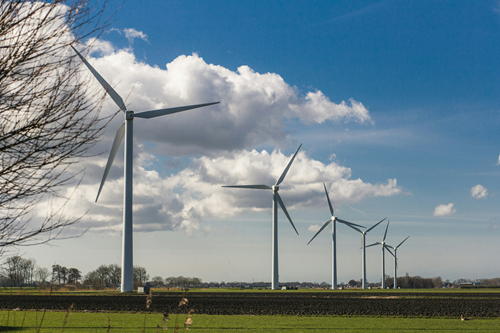
Political rhetoric surrounding the expansion of renewable energy has intensified in many quarters. “The data, however, tells a different story, as the expansion of clean energy is investment-driven, global and increasingly self-reinforcing”, comments Patrick Lemcke-Braselmann, CEO of the aream Group. This is clearly demonstrated by the new report from the IEA.
Global energy demand grew by 1.3 per cent in 2025. Electricity demand, however, grew at a much faster rate: with growth of just under three per cent, it rose more than twice as fast as overall energy demand, according to the International Energy Agency’s (IEA) Global Energy Review 2025. The organisation sees this as clear confirmation that the world has entered an “age of electricity”.
Solar energy, the largest single source of growth, met more than a quarter of the increased demand, followed by natural gas with a 17 per cent share. It was the first time since records began that a modern renewable energy source accounted for the largest share of global growth in energy demand. In total, around 60 per cent of global demand growth was attributable to low-emission energy sources such as solar, wind, nuclear and hydropower.
On the supply side, the expansion of electricity from renewable energy sources and nuclear power exceeded the total increase in demand. Solar power generation alone grew by 600 terawatt-hours in 2025 – the largest increase ever recorded for a single energy source outside of post-crisis periods – and met around 70 per cent of the additional electricity demand. Renewable energies have now almost reached the level of global coal-fired power generation. In the EU, the share of solar and wind energy, at 30 per cent, exceeded that of fossil fuels for the first time.
“The figures also show how quickly clean technologies can displace demand for fossil fuels when the right conditions are in place”, said Lemcke-Braselmann. In 2025, over 35 exajoules of fossil fuel demand were avoided – around seven per cent of global consumption. At the same time, around three billion tonnes of CO₂ emissions were saved, corresponding to around eight per cent of global emissions.
For the German solar plants in the aream portfolio, April was a mixed month. In Germany (target achievement 79 per cent), energy production was around 2,000 MWh lower than the good irradiation levels would have allowed, due to curtailment. The curtailed volumes are compensated. In Spain, irradiation levels were good, yet target achievement was only 78 per cent, as curtailment cost 1,400 MWh of energy. The plants in Italy, by contrast, delivered stable production (99 per cent of target) despite slightly below-average hours of sunshine. Aream’s wind farms fell well short of expectations in April, achieving around 83 per cent of their target.

PRESSEKONTAKT:
Leandra Kiebach
T: +49 (0)211 30 20 60 4-2
E: lk@aream.de