

The war in the Middle East is currently causing significant price fluctuations on the international energy markets. Oil and gas prices are reacting immediately – and electricity prices are following suit. “However, a closer look at the price structure reveals a more nuanced picture”, says René Kautz, CCO of the aream Group. “Whilst electricity for short-term delivery is becoming significantly more expensive, long-term exchange electricity prices remain comparatively stable.”
The energy markets currently draw a very clear distinction between short-term geopolitical risks and long-term structural trends. The mechanism is well understood: as the last technology to be brought online in the so-called merit order, gas-fired power stations often determine the price of electricity. If the price of gas rises – currently to over 50 euros/MWh – this has an immediate impact on electricity prices. On the EEX energy exchange, electricity futures were last quoted at around 89 euros/MWh for the second quarter of 2026, just under 100 euros/MWh for the third quarter and around 117 euros/MWh for the fourth quarter.
“These short-term price movements primarily reflect acute supply and transport risks”, says Kautz. “Market participants are factoring in potential disruptions to LNG supply chains or international tanker traffic.” As time passes since the current geopolitical situation, price levels on the futures market are stabilising. Electricity for the calendar year 2027 is currently valued at around 92 euros/MWh, and for 2028 at around 74 euros/MWh. “The futures market is already pricing in the fact that trade flows, infrastructure and supply will adapt in the medium term”, says Kautz.
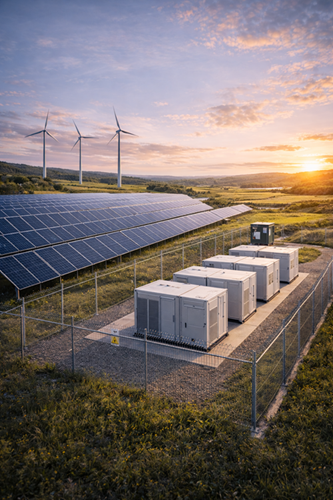
At the same time, the rising share of renewable energies is changing the structure of the electricity markets. More solar and wind energy leads to greater volatility with more frequent price spikes and negative prices – and thus to a growing economic value of flexibility in the energy system. “Flexibility is becoming a key value driver in the electricity system”, says Kautz. “For investors, revenue potential is increasingly arising from the combination of renewable generation, battery storage and smart marketing.” At the same time, many market participants expect that the revenue structure of renewable plants will also change with the further expansion of storage and flexibility. “We see rising prices on the horizon, particularly for solar projects”, says Kautz. “Greater flexibility in the system can make better use of price peaks and thus also improve the economic prospects of photovoltaics.”
The decisive difference between fossil and renewable energy sources is also strategic in nature: Solar and wind energy are independent of countries where oil and gas are produced, of geopolitical conflicts and of sensitive transport routes. “Short-term geopolitical tensions can trigger temporary price fluctuations”, says Kautz. “However, the long-term development of the energy system is shaped more by structural factors such as the expansion of renewables, system integration and flexibility.”

PRESSEKONTAKT:
Leandra Kiebach
T: +49 (0)211 30 20 60 4-2
E: lk@aream.de