A commentary by Markus W. Voigt, Executive Chairman of the aream Group.
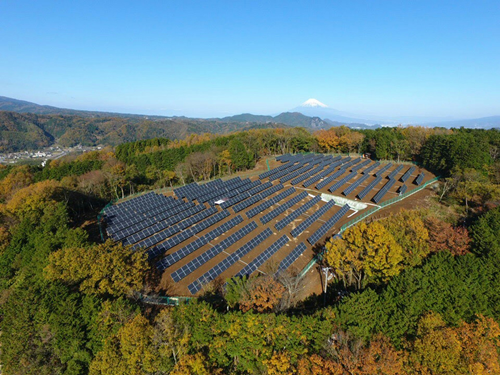
In Antalya, nearly 200 countries are once again haggling over wording for two weeks. Yet the most important debate has long since been decided – not in the conference hall, but in the marketplace. Anyone investing in renewables today need not be an idealist. It is enough simply to be able to do the maths. Wind and solar power are competitive; they deliver stable returns and come with no fuel bill. By 2025, renewables will have overtaken coal in global electricity generation, without a single consensus text having been necessary.
There is therefore no longer any need to convince countries and institutions of the merits of this cause. The bottom line speaks for itself: investments pay off, energy becomes cheaper and, as an added bonus, the environment is protected too. That may sound sobering, but it is the best news for the climate conference. Morality can be put on hold, as every COP proves time and again. In the long run, nobody turns down a good deal.
The problem today is no longer economic viability, but the pace of progress. In 2025 alone, Germany received grid connection applications for battery storage totalling around 574 gigawatts, yet only around 3.6 gigawatts are currently in operation. Even if many of these projects are never built, the gap highlights where the bottleneck lies. Politicians no longer need to persuade anyone to protect the climate. They must build grids, speed up the approval process and establish reliable regulations.
Instead, money is flowing into gas, of all things: in the first tender for new controllable power stations, the Federal Network Agency has just awarded contracts to eleven gas-fired power stations totalling just over five gigawatts. Battery storage systems came away empty-handed. The technology, which has long been self-sustaining on the market, is waiting for its grid connection. The technology that runs on fuel is the one receiving the subsidy.
Environmental protection has gone from being a cost factor to a side effect of a sound investment. Anyone who still puts the brakes on now is not saving industry, but squandering competitiveness. It is not only the climate that pays the price, but also our own economy.
PRESSEKONTAKT:
Leandra Kiebach
T: +49 (0)211 30 20 60 4-2
E: lk@aream.de